
AI news · October 12, 2026
Minerva's Roger is a teleoperated humanoid for bomb disposal
Minerva says Roger was built in 5 months, uses VR teleoperation with onboard balance and recovery, and is aimed at bomb disposal, hazmat and other dangerous jobs.
- reported build time for Roger
- 5 months
- example dangerous operating settings
- 3
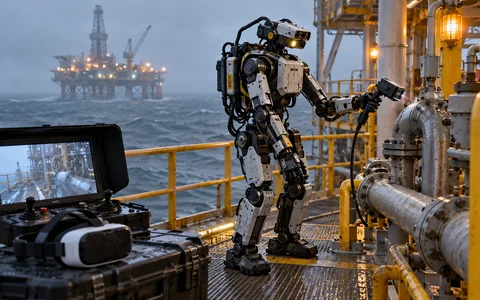
Minerva Humanoids is showing Roger as a walking humanoid that a remote operator controls through a VR headset. Superhuman's robotics report says the robot carries its own balance, navigation and fall-recovery functions while the human handles the difficult task. The first targets are bomb disposal, hazardous-material work, offshore oil and gas, and high-voltage sites. Minerva planned its first paid pilots for fall 2026 after building the platform in five months.
This is not a consumer robot launch or an open developer kit. The practical comparison is a conventional bomb-disposal or inspection robot, where a purpose-built arm and tracked base may still be safer and easier to certify. The interesting maker lesson is the split between human judgment and machine recovery: remote operation can be useful when the robot handles balance and the person handles exceptions. Pilot results, uptime and safety evidence are still missing.
What you can do with it
There is no public download to try. Watch for pilot results and study the control split if you build robotics software: capture operator input, sensor state and recovery events, then train the machine on the repeatable parts before adding more autonomy.
Our take
Roger is a credible deployment story because it names jobs where distance has immediate value, and because five months is a concrete build cycle. It is still an early pilot, not proof that a humanoid beats a cheaper specialized robot. The business will be won by uptime, remote-control quality and certification, not by walking demos.
Links Roger mission page
Source: Minerva Humanoids / Superhuman AI — Made With Models writes the brief; the reporting is theirs.