
AI news · October 15, 2026
Laplace Intelligence uses simulation agents to red-team physical AI
Physical AI needs an adversarial test loop before deployment: agents can generate corner cases, but simulation quality decides whether the test means anything.
- named customer groups
- 3
- rival funding reported
- $1.2B
- rival valuation reported
- $15B
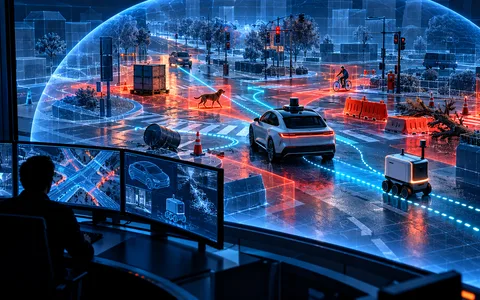
TechCrunch reported on October 13 that Laplace Intelligence red-teams robots and self-driving systems in high-fidelity simulation. Its AI agents design corner cases from news and police reports, while the platform reconstructs environments from maps and street imagery and models real-time traffic. The company says it works with Isuzu, Bot Auto and NVIDIA, and is running a free smart-city pilot in San Jose with T-Mobile.
The important product boundary is before the field test. A physical system needs repeatable failure scenarios, replayable evidence and a clear handoff from simulated risk to real-world validation. Simulation cannot prove safe behaviour when the world model is wrong, so builders should compare simulated failures with observed failures and track which tests change a release decision. The reported customer and revenue details remain company statements.
What you can do with it
Try it: use the demo with one known failure mode, such as an occluded pedestrian or an unexpected vehicle. Save the scenario, expected response and replay result. Only add more cases when the first test changes a real engineering or release decision.
Our take
Laplace is commercially interesting because it sells a test loop, not another autonomy model. The winning evidence is a shorter path to a caught failure. Simulation coverage without field correlation is a vanity metric, so keep the real-world comparison in the acceptance gate.
Links Try it
Source: TechCrunch / Laplace Intelligence — Made With Models writes the brief; the reporting is theirs.