
AI news · October 10, 2026
AI coding agents raise output, but review work rises faster
A study of 300M work events across 700,000+ employees found AI agents raised lines of code 30% and commits 20%, while pull-request review time rose 49%; shipping speed did not improve.
- work events studied
- 300M
- employees covered
- 700,000+
- pull-request review time
- +49%
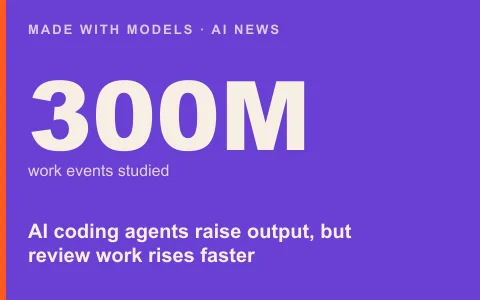
Ars Technica reported on Oct 9 about a study of 300 million work events across more than 700,000 employees at over 700 firms through March 2026. After AI agent adoption, lines of code rose 30%, commits 20%, and pull requests 23%, but issue resolution did not change. Pull-request review time rose 49%; requested changes nearly doubled, comments rose 35%, and the number of reviewers rose 14%.
The study also found that AI review covered only 23.3% of comments and 10.8% of pull requests in the sample. It did not find employment changes in the period studied. The useful comparison is between output counts and completed work: more code and commits can coexist with a larger review queue, so a coding agent is not a speed gain until the whole path to a resolved issue improves.
What you can do with it
Track cycle time, issue resolution, review hours, rework, and escaped bugs alongside lines and commits. Give an agent one repository and enforce tests plus human review; stop expanding if the review queue grows faster than completed work.
Our take
This is the strongest builder signal today because it measures work after agents enter real teams, not a small benchmark. More code with unchanged issue resolution is a warning: the bottleneck moves to review, so a product that sells agent speed without a review metric may be selling the wrong result.
Links Ars Technica report
Source: Ars Technica — Made With Models writes the brief; the reporting is theirs.