
AI news · October 9, 2026
OpenAI says it disrupted Russian and Iranian AI-assisted false-front operations
OpenAI says one Iranian operation used seven fake journalist personas and the Russian operation reached its first Category 5 rating, a warning for makers building publishing or social automation.
- Iranian personas
- 7
- Russian operation rating
- Category 5
- operations reported
- 30
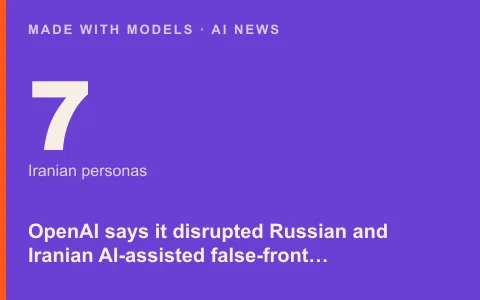
OpenAI reported Oct8 that it banned Russian and Iranian influence operations that used its models with ordinary publishing and account tools. The Iranian operation used seven fake journalist personas to pitch long-form articles to smaller outlets; OpenAI rated the Russian operation Category 5 and the Iranian operation Category 4 on the Brookings Breakout Scale.
The report says the operations reached mainstream media, not only social feeds, and adds them to 30 covert operations OpenAI says it has exposed over two and a half years. This is not a claim that every automated publisher is deceptive. It is a reminder that products which generate and distribute at scale need identity, review, and abuse detection designed into the workflow.
What you can do with it
If your product drafts or distributes public content, keep a clear record of who approved it, which accounts can publish, and how users can report abuse. Test fake-persona and mass-posting patterns before launch; automation should not make identity impossible to inspect.
Our take
This is useful product evidence because it shows how ordinary tools become dangerous when identity and distribution are hidden. The report is OpenAI's account of its own enforcement, not a complete map of influence activity. Still, the seven-persona example is a strong reason to build review and abuse controls early.
Links OpenAI report
Source: OpenAI ↗ — Made With Models writes the brief; the reporting is theirs.