
AI news · October 9, 2026
AI music bot fraud case ends with $8.1M forfeiture and 18 months in prison
A North Carolina man used 10,000 bot accounts and hundreds of thousands of AI songs to pull over $8M from streaming royalties, showing where platforms draw a hard line on synthetic volume.
- bot accounts
- 10,000
- forfeiture
- $8.1M
- prison sentence
- 18 months
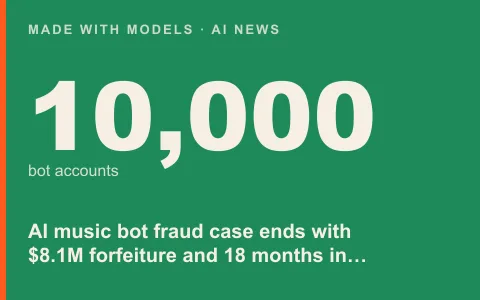
Ars reported Oct7 that Michael Smith received 18 months in prison after using AI-generated songs and automated accounts to defraud Amazon Music, Apple Music, Spotify, and YouTube Music. The DOJ says he ran as many as 10,000 bot accounts, spread billions of streams across hundreds of thousands of songs, and took more than $8 million from the royalty pool.
The case matters to creators because streaming payouts are shared: fake plays reduce the money available to real artists. It is also the DOJ's first criminal charge for AI-assisted streaming fraud, according to Ars and the court release. The lesson is not that synthetic music is illegal; it is that fake accounts, payment abuse, and manufactured listens turn automation into fraud.
What you can do with it
If you build a music or creator tool, separate creative generation from distribution and keep anti-abuse checks around accounts, payment methods, and play patterns. Use licensed test accounts and synthetic traffic labels; never treat volume alone as proof of audience or income.
Our take
This is a direct money signal for AI music and creator products. The case does not ban generated songs, but it makes fake demand expensive. A product that sells reach, plays, or audience data needs stronger identity and payout checks than a simple content generator.
Links Report DOJ release
Source: Ars Technica ↗ — Made With Models writes the brief; the reporting is theirs.