
AI news · October 17, 2026
A hardware reverse-engineering harness makes AI useful to driver work
A GNOME contributor used an AI agent plus USB trace capture to build a scanner driver in hours; the result worked only after human checks on real hardware.
- reported scanner dpi range
- 300–7,200
- reported faster scan time
- 34.6 sec
- reported earlier scan time
- 54.4 sec
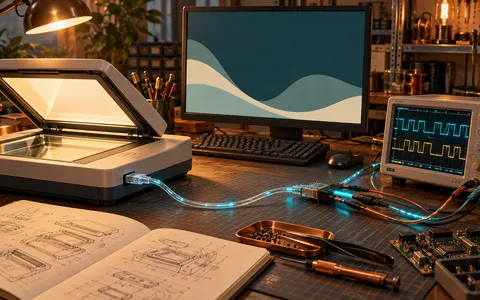
A GNOME blog post on October 15 describes a practical hardware experiment: the author used Claude, a Windows virtual machine, and USB capture to build a SANE driver for a Plustek scanner. The companion hw-harness can run a reference session against the vendor driver, capture USB traffic, and compare the trace with a Linux implementation. That turns undocumented behavior into data an agent can inspect.
The author reports support for 300 to 7,200 dpi, a faster scan path, and infrared support, but the real hardware still decides if the driver is correct. The post is a maker report, not a general benchmark. It is a useful pattern for old devices: record the reference behavior, ask the model to implement one slice, and test against the physical result.
What you can do with it
Try the harness only with hardware you own and a reversible test setup. Capture one reference action, implement one command, compare the trace, and test the result on the device. Record speed, missing modes, crashes, and manual fixes before adding more commands.
Our take
This story is stronger than a generic coding demo because the output faces a physical check. AI can reduce the tedious reverse-engineering work, but it cannot replace the device, trace, or human who knows when a driver is unsafe. The repeatable product unit is a verified device capability, not generated code.
Links Read the driver report
Source: Hacker News — Made With Models writes the brief; the reporting is theirs.