
AI news · October 13, 2026
Amazon says machine learning improves a million-pick robot test
Amazon's reported picker test reached 93.73% accuracy with machine learning versus 92.28% for a traditional method, or about 16,500 fewer failed picks in one million.
- robots in Amazon's network
- 1M
- reported ML picking accuracy
- 93.73%
- fewer failed picks in one million
- 16,500
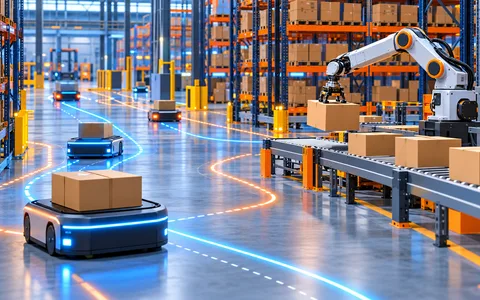
Amazon's warehouse automation story is about software decisions as much as robot hardware. Ars Technica reports that Amazon now has about one million robots working with 1.5 million human workers, while a DeepFleet model predicts congestion and helps route machines. In one picking comparison, machine learning reached 93.73% accuracy against 92.28% for a traditional method. Applied to one million picks, the difference would mean about 16,500 fewer failed picks in the reported example.
These figures describe Amazon's own systems and an operational setting with controlled sensors, storage and workflows. They do not show that a generic model can run a warehouse. The useful builder pattern is narrower: choose a repeated physical decision, collect failure data, compare a learned policy with a simple baseline and track the cost of retries. The human system still matters. A model that reduces one error type but makes recovery harder can lose the savings at the next station.
What you can do with it
If you build physical AI, start with one repeatable decision and a logged failure state. Keep a simple rule-based baseline, compare it with a learned model on the same held-out cases, and price the human recovery step. Roll out only when the model reduces total failed work, not just its own prediction error.
Our take
Amazon is a useful case because scale makes small accuracy changes commercial. The reported 16,500 fewer failures is an inference from the stated accuracy gap, not a general benchmark, and the system has a large warehouse operation behind it. The lesson for smaller teams is to measure total recovery cost and use a simple baseline before reaching for a larger model.
Links Report
Source: Amazon / Ars Technica — Made With Models writes the brief; the reporting is theirs.